 blog
Reliable Used Trucks in the Pittsburgh Area
Table of Contents
- Why Reliable Used Trucks Matter for Buyers
- How to Evaluate Used Truck Reliability
- Used Truck Inspection Checklist: What to Look For
- Understanding Used Truck Vehicle History Reports
- Finding Used GMC Sierra for Sale Near You
- Used Truck Financing Options and Credit Flexibility
- Comparing Truck Makes, Models, and Total Cost of Ownership
- Frequently Asked Questions
Last Updated: October 12, 2026
Why Reliable Used Trucks Matter for Buyers
Buying a used truck is one of the biggest purchases you'll make. Finding reliable used trucks in the Pittsburgh area demands a systematic approach to condition, history, and value.
The difference between a dependable truck and a money pit comes down to how thoroughly you inspect it before signing.
Reliable used trucks hold their value because they're built to last, but age, mileage, and maintenance history matter enormously. A well-maintained 10-year-old truck with 120,000 miles can outperform a newer model with spotty service records.
How to Evaluate Used Truck Reliability
Reliability isn't a guess. It's based on measurable factors: manufacturer reputation, model-year track record, maintenance history, and current mechanical condition.
Once you've narrowed down to specific models, dig into that truck's history.
Next, review the service records. Complete documentation, oil changes every 5,000 miles, fluid flushes on schedule, and repairs at reputable shops signal an owner who cared about longevity.
Finally, assess current condition through a hands-on inspection and professional diagnostic, non-negotiable for reliable used trucks.
Used Truck Inspection Checklist: What to Look For
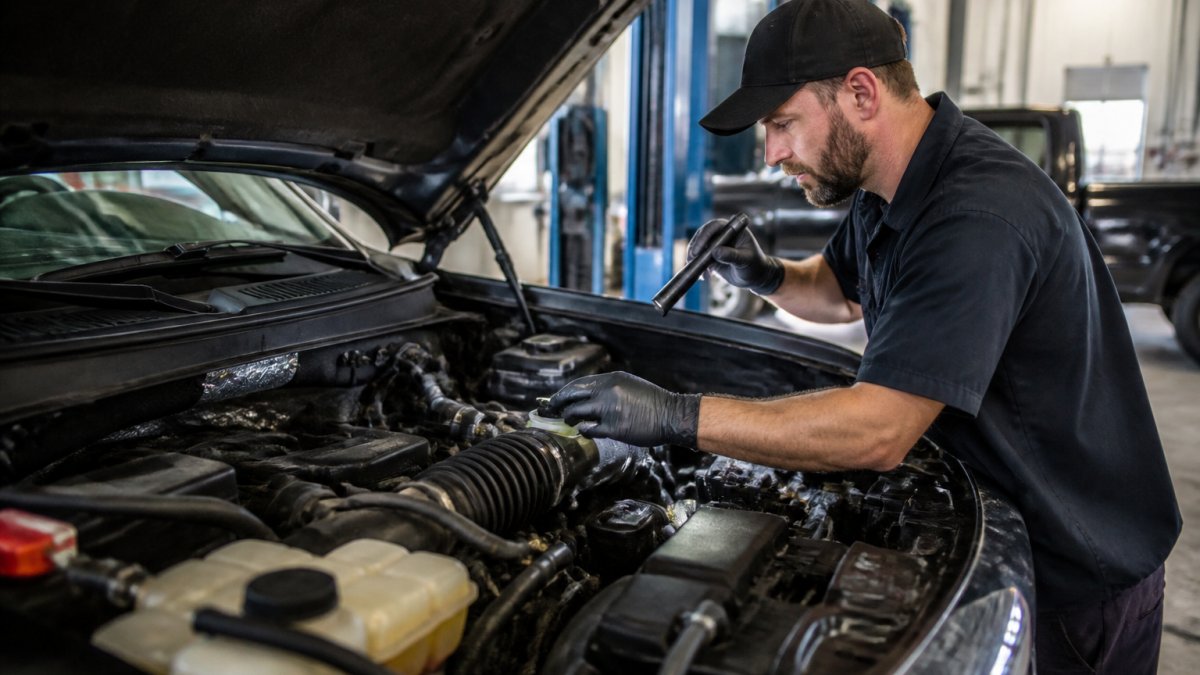
A proper inspection covers the engine, transmission, suspension, brakes, frame, and body. Trucks that spent years on treated winter roads show corrosion long before mechanical failure, so the underbody deserves as much attention as the engine bay.
Start With the Frame and Underbody
Bring a bright flashlight and a small pick or screwdriver. Crawl under the truck and inspect the frame rails, crossmembers, cab mounts, and rear leaf-spring hangers. Surface rust is normal; look for scale that flakes off in layers, soft spots a pick pushes through, and rust eaten into a structural member.
If the frame shows heavy scale or perforation, walk away. Frame repair is expensive, and a compromised frame affects load handling and crash performance. Surface rust you can wire-brush and treat is fine; structural rot is not.
Engine, Cold Start, and Fluids
Inspect the engine cold, before the seller warms it up, a warm engine can hide a rough idle, a lifter tick, or a slow-building oil-pressure light. Check the oil on the dipstick: amber to dark brown, not black and gritty, with no metal particles or milky sheen.
Start the engine and listen: knocking, ticking, or a pronounced cold-start rattle are warning signs. Watch for a rough idle or a check-engine light that stays on.
Transmission and Drivetrain
With the engine running and your foot on the brake, shift through each gear and pause briefly in each position. Then test drive with a cold start, stop-and-go driving, and highway speed. The transmission should engage firmly and shift smoothly without hesitation, slipping, or a hard clunk.
On four-wheel-drive trucks, engage 4-High and 4-Low on a loose or gravel surface and confirm the transfer case engages without grinding. Check the front axle and CV boots for torn rubber and grease leaks.
Brakes, Suspension, and Tires
Press the brake pedal firmly; it should feel solid, not spongy. Spongy brakes suggest air in the lines, a failing master cylinder, or worn pads.
Bounce each corner and watch how it settles: it should rebound once and stop, not keep bouncing, which indicates worn shocks or struts.
Check tire tread depth with a gauge and look for uneven wear: cupping on the inside edge suggests alignment or suspension problems, and mismatched tires can indicate corner-cutting.
Body, Glass, and Interior Electronics
Walk the body panels with a magnet or paint-thickness gauge to spot filler under fresh paint hiding collision repair. Check panel gaps, look for overspray on trim and weatherstripping, and inspect the windshield for chips and cracks. Inside, test every power feature, windows, locks, seats, mirrors, climate controls, infotainment, plus the four-wheel-drive selector, trailer-brake controller, and aftermarket accessories. Small electrical faults are cheap to fix but annoying to discover after purchase.
A pre-purchase inspection by an independent mechanic typically costs well under $200 and takes an hour or two. Ask the shop to put the truck on a lift, pull diagnostic codes, and check the frame and underbody. That fee is the cheapest insurance you can buy against a truck that turns into a repair bill.
How to Use What You Find
Write down every issue you find, with photos where possible. A clean inspection means move forward; a list of small issues is a negotiating tool; structural rust, a slipping transmission, or active diagnostic codes mean keep looking. No used truck is perfect, but the difference between normal wear and deferred maintenance is the difference between a dependable workhorse and a money pit.
Understanding Used Truck Vehicle History Reports
A vehicle history report documents accidents, title issues, service records, and ownership changes. It won't tell you everything, minor fender benders at independent shops won't appear, but it reveals major incidents and ownership patterns.
Watch for mileage discrepancies: 80,000 miles five years ago but 60,000 now is odometer fraud. Gaps in reported mileage, a jump from 50,000 to 120,000 in a single year, are unusual and worth investigating.
Service records in the report are valuable but incomplete, since many owners use independent shops that don't report to the system.
Finding Used GMC Sierra for Sale Near You
The GMC Sierra is a solid choice for buyers seeking reliable used trucks in the Pittsburgh area. Its reputation for durability and capability makes it a common find in the used market.
When searching for used GMC Sierra models, focus on what you'll actually use the truck for.
Joe Ball maintains an inventory of quality pre-owned GMC vehicles, including Sierra models. We inspect every truck and can walk you through condition, maintenance records, and financing options.
Search local dealership inventories online, but also check private sellers and auction sites.
Used Truck Financing Options and Credit Flexibility
Financing a used truck depends on your credit score, down payment, the truck's age and mileage, and the lender's terms. Most banks, credit unions, and captive finance arms offer used-vehicle loans, but terms vary widely, the questions you ask before signing matter as much as the quoted rate.
What Lenders Actually Look At
A strong credit score gets lower rates; a weaker score means higher rates and often a larger down payment. Lenders also weigh the loan-to-value ratio, the vehicle's age and mileage, and your debt-to-income ratio.
If your credit isn't perfect, don't assume you can't get financed. Many lenders, including our financing team, work with buyers across the credit spectrum, and some specialize in subprime financing, though rates are higher than prime lending. Be upfront about your situation and compare offers rather than accepting the first quote.
Questions to Ask About the Loan Itself
Before you sign, get clear answers to these:
- What is the annual percentage rate, and is it fixed or variable? A variable rate can rise over the life of the loan.
- What is the loan term, and what is the total interest paid over that term? A longer term lowers the monthly payment but increases total cost.
- Are there prepayment penalties? You want the right to pay the loan off early without a fee.
- Is gap insurance included or available? If the truck is totaled or stolen, gap coverage pays the difference between what you owe and what insurance pays.
- What documents are required, and how long does approval take? Knowing this up front prevents surprises at the dealership.
Warranty Coverage: What to Confirm in Writing
A used truck may come with the remainder of the factory warranty, a certified pre-owned (CPO) warranty, a dealer-provided limited warranty, or no warranty at all. Ask specifically:
- What is covered, and for how long (months and miles)?
- Is there a deductible per visit?
- Are there exclusions for wear items, cosmetic issues, or pre-existing conditions?
- Is the warranty honored at other shops, or only at the selling dealership?
- Can you see the warranty document before you buy?
A CPO truck typically carries a manufacturer-backed limited warranty and a passed multi-point inspection, which is why CPO vehicles often cost more. That premium can be worth it if the coverage is meaningful.
Return Policies and Buyer Protections
Return policies on used trucks vary by dealership. Ask whether the dealer offers a return window, how many days or miles it covers, and what conditions apply (no damage, no excessive mileage). Some offer a short exchange or return period; others offer none.
Federal law requires dealers to display a Buyer's Guide on used vehicles stating whether the vehicle is sold "as is" or with a warranty (the FTC). Read it. If the truck is sold as is, you have no warranty recourse, so the pre-purchase inspection matters even more.
Total Cost of Ownership, Not Just the Monthly Payment
Consider total cost of ownership, not just the monthly payment. A lower purchase price doesn't always mean lower total cost if the truck needs expensive repairs. Factor in insurance, fuel, maintenance, and likely repairs based on age and condition.
Down payment size affects both your monthly payment and loan terms. A larger down payment reduces what you borrow and often qualifies you for better rates. Put down 20% or more and you're in a stronger negotiating position, less likely to be upside down on the loan.
Before you commit, get three things in writing: the loan terms (rate, term, total interest, prepayment rules), the warranty coverage (what is covered, for how long, and where it is honored), and the return policy (if any). Those three documents tell you more about the real cost and risk of a used truck than the sticker price ever will.
Comparing Truck Makes, Models, and Total Cost of Ownership
Different truck brands have different strengths. Chevrolet Silverado offers competitive pricing and solid reliability. GMC Sierra sits at the premium end of the GM lineup with more features and refinement.
Total cost of ownership includes purchase price, financing, insurance, fuel, maintenance, and repairs.
| Factor | Impact on Total Cost | How to Evaluate |
|---|---|---|
| Purchase Price | Direct cost | Compare market listings for similar models |
| Fuel Economy | Ongoing expense | Check EPA ratings; diesel vs. gasoline tradeoffs |
| Maintenance | Recurring cost | Research typical maintenance for model year |
| Repairs | Variable expense | Inspect condition; check for known issues |
| Insurance | Annual cost | Get quotes based on truck's value and type |
| Financing Rate | Loan cost | Depends on credit and down payment |
| Resale Value | Future recovery | Strong brands hold value better |
When comparing trucks, run the numbers.
Finding reliable used trucks in the Pittsburgh area doesn't require luck, it requires a clear process. Evaluate the truck's history, inspect it thoroughly, understand its true cost of ownership, and finance it strategically.
Frequently Asked Questions
What should I check before buying a reliable used truck?
Before purchasing a reliable used truck, inspect the engine, transmission, brakes, tires, and suspension for signs of wear or damage. Request a vehicle history report to verify accident history and service records. Check the odometer reading against maintenance records, trucks with consistent service typically indicate better reliability. Have an independent mechanic perform a pre-purchase inspection if possible. Review the truck's specific model year for known issues and recall history.
How do I know if a used truck has a reliable vehicle history?
A used truck vehicle history report shows accident history, title status, odometer readings, and service records. Look for trucks with clean title status (no salvage or flood damage), consistent maintenance records, and no major accidents. Single-owner vehicles often indicate better care than those with multiple owners. Verify that the mileage progression matches the vehicle's age, large gaps or decreasing mileage are red flags. Request service records from the dealership to confirm regular maintenance.
What makes a used GMC Sierra for sale near me a good choice?
The GMC Sierra is known for durability and strong towing capacity, making it reliable for work and personal use. When evaluating a used GMC Sierra for sale near you, check for consistent maintenance records, verify the engine type (V6 or V8), and confirm the transmission condition. Inspect the bed and frame for rust or damage, especially if the truck has been used for work. Compare model years, newer generations typically offer improved reliability and fuel efficiency. Confirm warranty options available through your dealership.
What are my options for used truck financing if I have credit challenges?
Used truck financing is available regardless of credit history through dealerships that work with multiple lenders. Flexible financing options may include higher interest rates or larger down payments for buyers with lower credit scores. Get pre-approved before shopping to understand your budget and monthly payment range. Consider a co-signer to improve loan terms. Ask your dealership about in-house financing. Compare offers from multiple lenders to find the best rate for your situation.