 how-to
How to Buy a Used Car With Bad Credit in Pennsylvania
Last Updated: November 4, 2026
Quick Summary
Buying a used car bad credit loan is possible by checking your credit report first, setting a realistic monthly budget, and getting pre-approved before you shop. Compare the APR and total cost of each offer, not just the monthly payment, and bring the required documents such as proof of income, residence and insurance.
- Check your credit report for errors and dispute them; you can get free reports at AnnualCreditReport.com.
- Compare APR and total of payments, since a low monthly payment can hide a long term and high rate.
- A down payment lowers the amount financed and reduces the risk of owing more than the car is worth.
- Get pre-approved by a bank or credit union to benchmark against dealership financing offers.
- Make on-time payments and consider refinancing after 12 to 18 months of good payment history.
Table of Contents
- Why Bad Credit Changes the Used Car Buying Process
- Used Car Financing Requirements for Poor Credit
- How to Buy a Car With Bad Credit and No Down Payment
- How to Buy a Car With Bad Credit and No Cosigner
- In-House Financing vs. Traditional Bank Loans
- Spotting Predatory Lending and the Toll It Takes
- Scheduling Your Visit to Joe Ball in Glenshaw
- Frequently Asked Questions
Why Bad Credit Changes the Used Car Buying Process
Buying a used car with bad credit is harder, but a used car bad credit purchase is not impossible. Lenders generally see a low credit score as a sign of higher risk, so they tend to offer higher interest rates or ask for more money upfront. Knowing how this works, and how lenders actually price risk, helps you plan before you ever step onto a lot.
At Joe Ball in Glenshaw, PA, we offer financing and assistance for buyers across a range of credit situations. Our goal is to help you understand each option so you can pick the one that fits your budget.
How credit scores affect auto loan approval and rates
Your credit score is one of the first things a lender checks. A higher score usually means a lower rate and easier approval. A lower score often means the opposite.
Most lenders sort applicants into risk tiers rather than approving or denying on a single cutoff. A common pattern is that the top tier (roughly 781-850 on the FICO scale) gets the lowest advertised rate, while each tier below it adds a pricing bump.
Lenders also look at:
- Payment history: Late or missed payments carry a lot of weight, it is typically the single largest factor in a FICO score.
- Credit use: How much of your available credit you are using. Keeping balances below about 30% of your limits helps; maxed-out cards hurt.
- Debt-to-income ratio: How much of your monthly income goes toward debt. Many auto lenders look for total debt payments (including the new car loan) to stay within a manageable share of gross monthly income.
- Length of credit history: How long your accounts have been open.
- New credit and inquiries: A cluster of recent applications can signal risk, though auto-loan rate shopping within a short window is usually treated as a single inquiry.
If your score is low, you may still qualify. You will likely pay more over the life of the loan, so review your credit report before you shop. You can pull free credit reports from the nationwide credit bureaus through AnnualCreditReport.com (How do I get a free copy of my credit reports?).
Understanding APR and what it means for your monthly payment
APR, or annual percentage rate, is the yearly cost of borrowing money (What is the difference between a loan interest rate and the APR?). It includes the interest rate plus certain fees. A higher APR means a higher monthly payment and more total interest paid.
For example, a jump from a lower rate to a much higher rate on the same loan can add substantially to the total cost. Always compare the APR, not just the monthly payment, when you compare offers. Two offers with the same monthly payment can have very different total costs if one stretches the term to 72 or 84 months.
Watch out: A low monthly payment can hide a long loan term and a high APR. Check the total amount you will pay before you sign, and ask for the amount financed, the finance charge, and the total of payments.
Used Car Financing Requirements for Poor Credit
Most lenders ask for the same basic items, even when your credit is weak. Having these ready can speed up the process.
- Valid driver's license or state ID
- Proof of income, such as recent pay stubs or bank statements
- Proof of residence, such as a utility bill
- Proof of auto insurance
- References, if the lender asks for them
- A down payment, if required
Some lenders also require a cosigner or a larger down payment for buyers with poor credit. Ask about these requirements before you apply so there are no surprises.
Most lenders ask for the same core documents, even when credit is weak, so gathering them early can speed up approval.
| Item | Why it matters |
|---|---|
| Driver's license or state ID | Confirms your identity |
| Proof of income | Pay stubs or bank statements show ability to pay |
| Proof of residence | Typically a utility bill |
| Proof of auto insurance | Required to drive the car off the lot |
| References | Sometimes requested by the lender |
| Down payment | May be required for poor-credit buyers |
How to Buy a Car With Bad Credit and No Down Payment
Buying a car with no money down is possible for some buyers, but a used car bad credit loan with no down payment usually means a higher loan balance and a higher monthly payment. A down payment lowers the amount you borrow, which can help you get approved and reduce your rate.
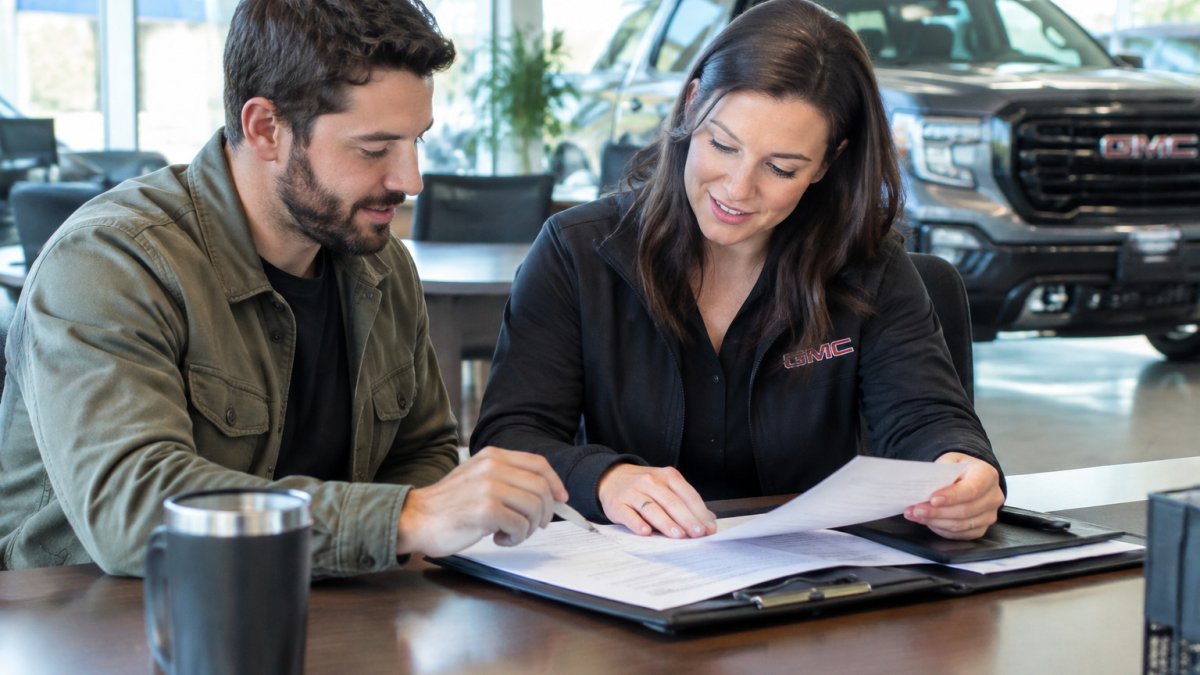
Here is a simple way to approach it:
- Check your credit report. Look for errors and dispute them. You can do this for free at AnnualCreditReport.com.
- Set a monthly budget. Include insurance, fuel, and maintenance, not just the loan payment. A common guideline is to keep total vehicle costs to a modest share of take-home pay.
- Get pre-approved. Ask lenders what rate and terms you may qualify for. A pre-approval gives you a benchmark before you negotiate.
- Compare total costs. Look at the full price, not just the payment. Ask for the out-the-door price in writing.
- Ask about fees. Confirm there are no hidden charges, documentation fees, dealer prep, and add-ons should be itemized.
The role of a down payment in bad credit financing
A down payment shows the lender you have skin in the game. Even a small amount can make a difference. It also reduces the risk of owing more than the car is worth, which is common with no-money-down loans.
A no-down-payment loan on a used car can start with you owing more than the vehicle is worth, because used cars depreciate and loan balances can include taxes and fees. A down payment can reduce that gap. Keeping the loan balance closer to the car’s value can also leave more room in your budget for taxes and fees when registering your vehicle in Pennsylvania.
If you cannot put money down now, consider saving for a few months before you buy. A short delay can lead to a better loan.
A post-purchase credit repair roadmap
Most guides stop at the sale. The loan itself is a tool for rebuilding credit if you use it deliberately:
- Pay on time, every time. Payment history is the largest scoring factor, and a single 30-day late can sting for months.
- Set up autopay for at least the minimum so a busy week does not become a missed payment.
- Pay extra toward principal when you can, which lowers your balance and improves your loan-to-value position.
- Keep credit card balances low and avoid opening several new accounts right after the auto loan.
- Check your reports again in 6-12 months and dispute anything inaccurate.
- Consider refinancing after 12-18 months of on-time payments, a better score and a lower balance can qualify you for a lower APR, and refinancing a used-car loan is common.
Watch out: Some no-money-down offers can bundle fees and add-ons into the loan balance, which increases the amount financed and the interest you pay. Ask for an itemized breakdown before you agree.
How to Buy a Car With Bad Credit and No Cosigner
Many buyers with poor credit do not have a cosigner. You can still get approved without one. Start by showing steady income and a reliable record of paying bills on time, even if your credit score is low.
Some lenders focus more on current income and employment than on past credit history. Ask whether a lender offers programs for buyers in your situation.
In-House Financing vs. Traditional Bank Loans
You have two main routes for financing a used car with bad credit: a bank or credit union loan, or in-house financing through the dealership.
- Bank or credit union loans: Often have lower rates, but stricter approval rules.
- In-house financing: May be easier to qualify for, but can carry higher rates and shorter terms.
Compare both before you decide. Getting pre-approved by a bank gives you a benchmark to measure dealership offers against.
Spotting Predatory Lending and the Toll It Takes
Predatory lenders target buyers with poor credit. They may push you into a loan you cannot afford, hide fees in the fine print, or pressure you to sign quickly.
Watch for these warning signs:
- Pressure to sign the same day with no time to read
- Rates or fees that were not discussed before
- Blank spaces left in the contract
- Add-ons you did not request
- Refusal to give you a copy of the contract
Bad loans can cause stress that lasts long after the purchase. If something feels wrong, walk away. You can also report concerns to the Federal Trade Commission at FTC guidance on auto financing.
Scheduling Your Visit to Joe Ball in Glenshaw
Joe Ball offers a selection of new and pre-owned GMC vehicles, along with financing assistance. Our team will walk you through each step, so you know what you are signing.
We serve the Greater Pittsburgh area, including Glenshaw, Allison Park, Monroeville, Etna, and Gibsonia. To get started, use our online financing tools, then browse our pre-owned vehicles to see what fits your budget. You can also check our new vehicle inventory before you visit or learn why buyers choose Joe Ball.
When you are ready, schedule a test drive and bring your financing documents with you. We will help you find a vehicle and a payment plan that work for your life.
Frequently Asked Questions
Can I get a used car with a 500 credit score?
Yes, it is possible, though options are narrower. Lenders that work with subprime borrowers often approve buyers with scores in the 500s, but the interest rate will usually be higher than for borrowers with good credit. A larger down payment, a shorter loan term and a lower-priced vehicle can all improve your chances. Compare the total cost of the loan, not just the monthly payment, before you sign.
Is it possible to buy a car with a 480 credit score?
It is possible at some dealerships and with some lenders that specialize in subprime auto loans. Approval is less likely at a score this low, so expect to provide proof of income, residence and employment, and possibly a down payment. Be cautious of lenders that promise guaranteed approval without reviewing your income, since those loans often carry very high rates and fees.
What is the $3,000 rule for buying a used car?
The $3,000 rule is a common guideline suggesting that you should not buy a car if its repair costs or depreciation would exceed a certain amount in a short period. Many buyers use it as a budget check: if you cannot comfortably absorb an unexpected $3,000 repair, the vehicle may stretch your finances too far. Use it as a starting point and factor in insurance, fuel and maintenance.