 ultimate-guide
The First-Time Car Buyer's Guide to Getting It Right
Last Updated: November 5, 2026
Quick Summary
The most important tip for buying your first car is to set a realistic out-the-door budget before you shop, not a monthly payment. Budget for total cost of ownership too, including insurance, fuel, maintenance, repairs, and depreciation, and get car loan preapproval so you know your rate and ceiling in advance.
- Budget against the out-the-door price, which includes sales tax, title, registration, and dealer doc fees.
- Total cost of ownership adds fuel, insurance, maintenance, repairs, and depreciation to the purchase price.
- Get car loan preapproval to learn your interest rate range and budget ceiling before visiting a dealer.
- Book a pre-purchase inspection with an independent mechanic on any used car before buying.
- Confirm the contract matches the buyer's order and never sign a form with blank fields.
Table of Contents
- Start With a Realistic Budget Before You Shop
- Research Makes and Models That Fit Your Needs
- Check Your Credit and Get Car Loan Preapproval
- Understanding Your First-Time Car Buyer Auto Loan
- Inspect the Vehicle and Review Its History
- Negotiate the Price and Watch the Paperwork
- Budget for Insurance, Registration, and Maintenance
- Book a Test Drive at Joe Ball
- Frequently Asked Questions
Start With a Realistic Budget Before You Shop
The most important tip for buying your first car is to decide what you can afford before you fall in love with a vehicle. A first car is a monthly commitment, not a one-time purchase, and the buyers who get into trouble are almost always the ones who shopped on payment alone.
Walking through the numbers before anyone touches a set of keys is a sound way to approach a first car purchase.
Work Out Your Out-the-Door Number
Your out-the-door price is the vehicle price plus sales tax, title and registration fees, and any dealer documentation fees. It is the number that actually leaves your bank account, so it is the number you should budget against.
A common approach is to set your ceiling at the out-the-door figure, not the sticker price, then work backward to a comfortable monthly payment.
Factor In Total Cost of Ownership
Total cost of ownership is the purchase price plus everything you will spend to keep the car on the road: fuel, insurance, maintenance, repairs, and depreciation.
- Insurance premiums vary widely by vehicle and driver history
- Fuel economy changes your monthly spend more than most people expect
- Routine maintenance and tires are predictable costs worth planning for
A practical rule: leave room in your monthly budget for ownership costs on top of the loan payment.
Here are the costs that make up your out-the-door price and the ongoing ownership expenses to plan for.
| Item | What it covers | Note |
|---|---|---|
| Out-the-door price | Vehicle price plus sales tax, title, registration, doc fees | Budget against this, not the sticker price |
| Total cost of ownership | Purchase price plus fuel, insurance, maintenance, repairs, depreciation | Leave room on top of the loan payment |
| Insurance | Premiums vary by vehicle and driver history | Get quotes on the exact vehicle before buying |
| Fuel | Monthly spend affected by fuel economy | Changes your monthly spend more than expected |
| Maintenance and tires | Routine service and predictable costs | Worth planning for |
| Depreciation | Value lost over time | Hits new cars hardest in the first few years |
Research Makes and Models That Fit Your Needs
Vehicle research starts with your actual life, not a wish list. List your daily commute, how many passengers you carry, whether you need cargo space or towing capability, and where you park. Those answers narrow the field fast.
From there, compare reliability records, safety features, fuel economy, and repair costs across the makes and models that fit. NHTSA safety ratings and recall information is a free, official starting point for crash-test results and open recalls on any vehicle you are considering.
You can browse models that match your needs and budget to see how different vehicles compare before you commit to a shortlist.
New Versus Used: A Decision Framework
If your priority is the lowest total cost and you can accept some prior mileage, a quality pre-owned vehicle usually wins. If you want the latest safety technology, a full warranty, and predictable maintenance from day one, a new car makes more sense.
Ask yourself three questions:
- Can I absorb a surprise repair bill this year?
- Do I need the vehicle to be under factory warranty?
- Is my priority monthly payment or long-term cost?
Your answers point to one side of the line. Neither choice is wrong; mismatching the choice to your situation is what hurts.
Check Your Credit and Get Car Loan Preapproval
Car loan preapproval is a lender's conditional commitment to finance you up to a set amount before you shop.
Check your credit reports first and dispute any errors you find. A common mistake is skipping this step and accepting the first rate quoted.
If your credit history is thin or imperfect, a step-by-step walkthrough helps: our guide on auto loan approval with bad credit explains what lenders look at and how to prepare.
Understanding Your First-Time Car Buyer Auto Loan
A first-time car buyer auto loan is a financing agreement built around a shorter credit history, often with a larger down payment or a co-signer to offset the risk.
- Interest rate is the cost of borrowing the principal
- APR includes the rate plus certain fees, so it is the better comparison number (What is the difference between a loan interest rate and the APR?)
- Loan term is how long you repay; longer terms lower the payment but raise total interest
Ask for the APR in writing and compare it against your preapproval. For a deeper look at financing a used vehicle when credit is less than perfect, read our guide on buying a used car with bad credit.
Inspect the Vehicle and Review Its History
Never buy a vehicle you have not inspected, and never skip the paperwork. A vehicle history report shows title status, reported accidents, odometer readings, and whether a lien is attached.
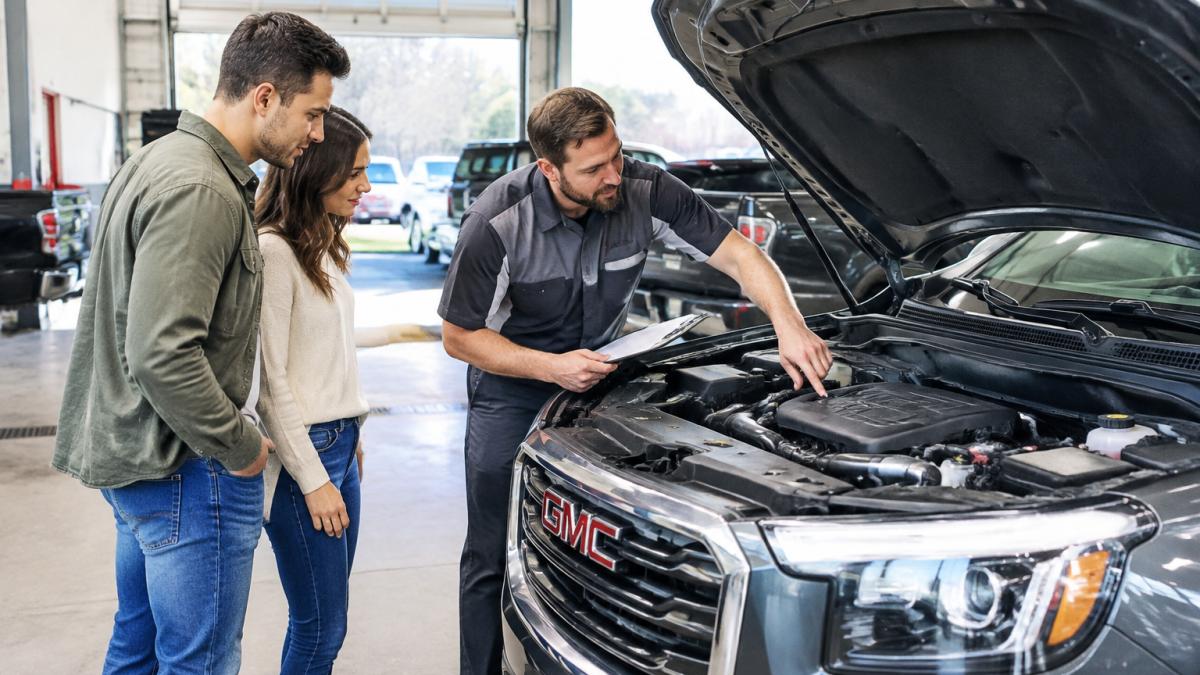
Then book a pre-purchase inspection with an independent mechanic. On a used car, this is the single best money you will spend.
At Joe Ball, we make history easy to verify: you can see how we document one-owner vehicle history before you commit.
Negotiate the Price and Watch the Paperwork
Negotiation is normal, and it works best when you separate the four numbers: vehicle price, trade-in value, financing rate, and add-ons. Settle the price first, then discuss the rest. If you have a trade-in, get its value appraised separately so it does not get buried in the deal.
The part most first-time buyers underestimate is the paperwork. The document that matters is the buyer's order, sometimes called a purchase agreement or worksheet. It is the dealer's written summary of the deal, and every number on the contract you eventually sign should trace back to it.
Know Which Fees Are Required and Which Are Negotiable
An itemized out-the-door quote should separate government charges from dealer charges. Sales tax, title, and registration are set by your state and are not negotiable. Dealer documentation fees, preparation fees, and administrative fees are set by the dealer and vary, ask what each one covers and whether it can be reduced. A common pattern is for a doc fee to appear only at signing, which is why you ask for the itemized quote in writing first.
Treat Add-Ons as Separate Purchases
Add-ons sold in the finance office, fabric protection, paint sealant, extended warranties, gap insurance, tire-and-wheel coverage, and maintenance plans, are optional products, not part of the car. Each one should be priced individually and declined or accepted on its own merits.
Watch out: add-ons are often quoted as a small monthly increase rather than a total price, which makes a $2,000 product sound like $30.
Read the Contract Before You Sign
Before signing, confirm four things on the contract: the out-the-door price matches the buyer's order, the APR and term match your preapproval or the agreed loan, the add-ons listed are only the ones you accepted, and there is no blank space anywhere on the form. Never sign a contract with blank fields, and never take the vehicle home before the financing is final, a spot delivery or "yo-yo" situation can bring you back to re-sign at a higher rate if the lender declines the original terms.
If you are buying from a private seller instead of a dealer, the paperwork is different but no less important: verify the title is in the seller's name, check for a lien, and confirm the title will be signed over to you at the time of payment. Pay in a traceable form and get a signed bill of sale with the vehicle identification number, odometer reading, price, and date.
Budget for Insurance, Registration, and Maintenance
The purchase is not the finish line. The costs that follow the sale are what separate a car you can afford from a car you can only finance. Build a simple total-cost-of-ownership estimate before you commit, using the specific vehicle you are considering rather than a generic average.
Estimate Insurance Before You Buy
Insurance is often the largest ongoing cost for a first-time driver. Get quotes on the exact make, model, trim, and year before you buy, not after, rates depend on the vehicle, your coverage choices, your deductible, and your driving record. Two vehicles with similar sticker prices can carry very different premiums, and a sports trim or a vehicle with expensive parts can cost noticeably more to insure than a base model.
Registration, Title, and Inspection
Registration and title fees are set by your state, and your state motor vehicle agency publishes the current fees, renewal schedule, and inspection requirements. In most states you will pay sales tax at the time of registration, and some states charge an annual property tax or excise tax based on the vehicle's value. If your state requires a safety or emissions inspection, confirm the vehicle will pass before you buy it, a failed inspection can turn a good deal into an unexpected repair bill.
Worked Example: What the Monthly Cost Really Looks Like
Consider how ownership costs add up on top of a loan payment. Start with the loan payment, then add the ownership costs:
That gap is why a payment-only budget fails. The same math applies to a new car, where depreciation is also a real cost, a new vehicle can lose a meaningful share of its value in the first few years, which matters if you plan to sell or trade before the loan is paid off.
Build the Maintenance Fund Now
Set aside a maintenance fund from the first month for oil changes, brakes, tires, and unexpected repairs. Routine service is predictable; a transmission or air-conditioning failure is not. A used vehicle with no warranty should carry a larger fund than a new one under factory coverage. If the total monthly figure, loan plus insurance plus fuel plus maintenance plus registration, does not fit comfortably in your budget, the vehicle is too expensive, regardless of how good the price looks.
Book a Test Drive at Joe Ball
A test drive confirms what research cannot: whether the vehicle fits you. Adjust the seat and mirrors, check visibility, test the brakes and acceleration, and listen for unusual noises. Bring your preapproval so you can move quickly if it is the right fit.
Schedule a test drive and see the vehicle in person before you decide.
Frequently Asked Questions
How much should I save before buying my first car?
A common guideline is a down payment of 10 to 20 percent of the purchase price, plus enough cash to cover sales tax, registration, and your first insurance payment. Keep a small emergency fund for repairs, especially on a used car, so a surprise repair does not derail your monthly budget.
Should I get preapproved for a car loan before visiting a dealership?
Yes. Car loan preapproval from a bank or credit union tells you the interest rate and loan amount you qualify for before you set foot on a lot. It gives you a negotiating benchmark and lets you compare the dealer's financing offer against a real alternative. Preapproval usually involves a soft or single hard credit pull, so shop rates within a short window to limit the impact on your credit score.
Can I get a used car with a 500 credit score?
It is possible, though the terms will be less favorable. Lenders that work with lower credit scores typically require a larger down payment and charge a higher APR, which raises your monthly payment. A first-time car buyer auto loan through a dealership that works with all credit levels can help, but compare the total interest cost, not just the monthly figure. Bringing a co-signer or a bigger down payment can improve your approval odds.
What should I check when buying a used car?
Follow a used car inspection checklist: tires, brakes, fluid levels, battery, lights, and signs of rust or accident repair. Ask for a vehicle history report to check for title brands, liens, and prior accidents, and confirm the title is clean and in the seller's name. Have an independent mechanic do a pre-purchase inspection before you commit. On a test drive, listen for unusual noises and check that safety features work.
Is it better to buy a new or used car as a first-time buyer?
It depends on your budget and risk tolerance. A new car comes with a full warranty and the latest safety features but depreciates fastest in the first few years. A used car costs less upfront and has already absorbed the steepest depreciation, but you should budget for repairs and verify its history. If you want predictable costs, new or certified pre-owned is safer; if you want the lowest purchase price, a well-inspected used car wins.
What fees should I expect when buying a car?
Beyond the purchase price, expect sales tax, title and registration fees, and a documentation fee. Dealers may also add dealer-installed accessories, extended warranties, and gap insurance. Ask for the out-the-door price in writing before you negotiate, and question any add-on you did not request. A transparent dealer will itemize every charge so you can see exactly what you are paying for.
Buying your first car should feel exciting, not overwhelming. If you want a dealership that walks you through financing, shows you the numbers upfront, and puts you behind the wheel without pressure, Joe Ball is ready to help. Our credit specialists work with all credit levels, our online financing application is secure and straightforward, and our inventory covers new and quality pre-owned GMC vehicles. Get started with Joe Ball and drive home with confidence.